


Where do climbing gyms stand today?
Climbing sports have exploded over the past five years. Boulder gyms, lead walls, and mixed climbing centers serve both local athletes and tourists across major cities and beyond. The sport is shaping into more than a fitness trend -- it's becoming a community. Regular members, weekly visitors, course students, tourist groups, first-timers renting gear -- all these different user types come together under one roof. This diversity creates an exciting ecosystem, but it also produces an operationally complex structure.
Most climbing gyms still run their operations with the "safety staff's memory + WhatsApp + paper notebook" trifecta. On weekends, the wall gets overcrowded and members wait in line. Tempers flare. Beginner course signups come through Instagram DMs, payment flows fall apart, participant tracking gets confusing. New route announcements live and die on Instagram Stories. Nobody remembers who completed which route. Gear rental records sit in notebooks, but in reality, no one knows where some shoes ended up. That is exactly when the right climbing gym management software becomes a critical tool for both safety and profitability.
Why does a climbing gym need specialized software?
Climbing gym operations differ significantly from standard fitness facilities. The most critical difference is physical capacity: in a boulder gym, the number of climbers who can be on the wall simultaneously is limited. When that limit is exceeded, climbing quality degrades, fall zones become inadequate, and injury risk increases. This means climbing gym software must handle capacity management with a fundamentally different approach than a salon's booking tool: hourly slots, check-in/check-out tracking, real-time occupancy rates, and reservation controls based on safe limits.
The second critical difference is route management. Boulder and lead routes are stripped and reset periodically. Each new route has a different grade, style, and difficulty level. Members want to track which routes they've completed, where they're stuck, and what their next target is. This isn't just a hobby -- it's the core motivation of the climbing community. Climbing software needs to treat routes as inventory objects, archive them by date, and maintain completion logs in member profiles. The third difference is gear rental. Daily rentals of climbing shoes, harnesses, and chalk bags are a significant revenue stream for climbing gyms and must be systematically tracked. Piyzi was designed around these three core differences of climbing gyms.
Core value Piyzi delivers for climbing gyms
Piyzi is a system that resolves the operational complexity of climbing gyms on one platform. Five building blocks:
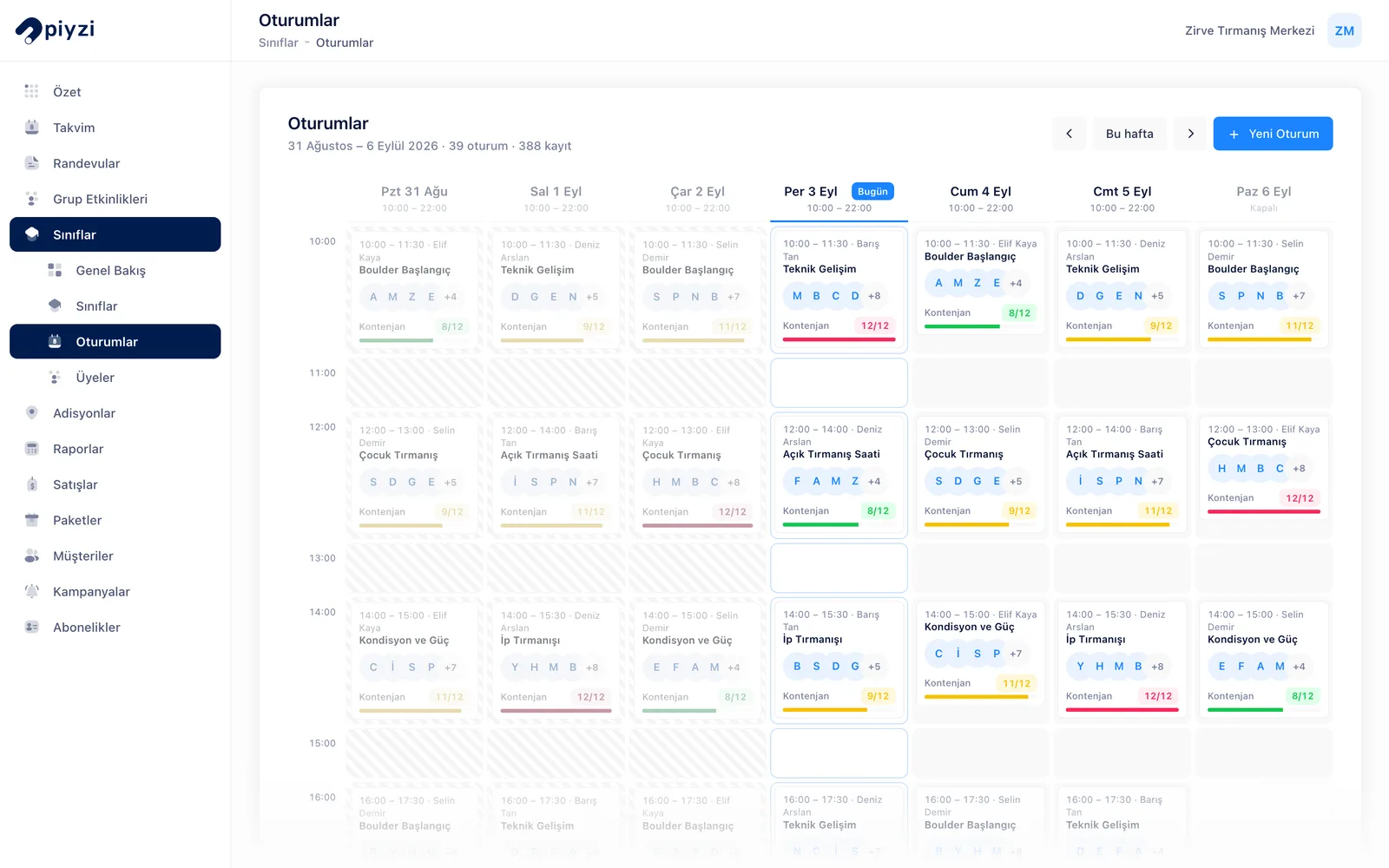
- Group Classes & Capacity Management: Beginner courses, intermediate route sessions, and group training are planned with capacity controls. Gym occupancy stays within safe limits.
- QR Attendance: Members and day-pass visitors scan their QR code on arrival. Check-in/check-out records are stored automatically. Complete archives for insurance and safety compliance.
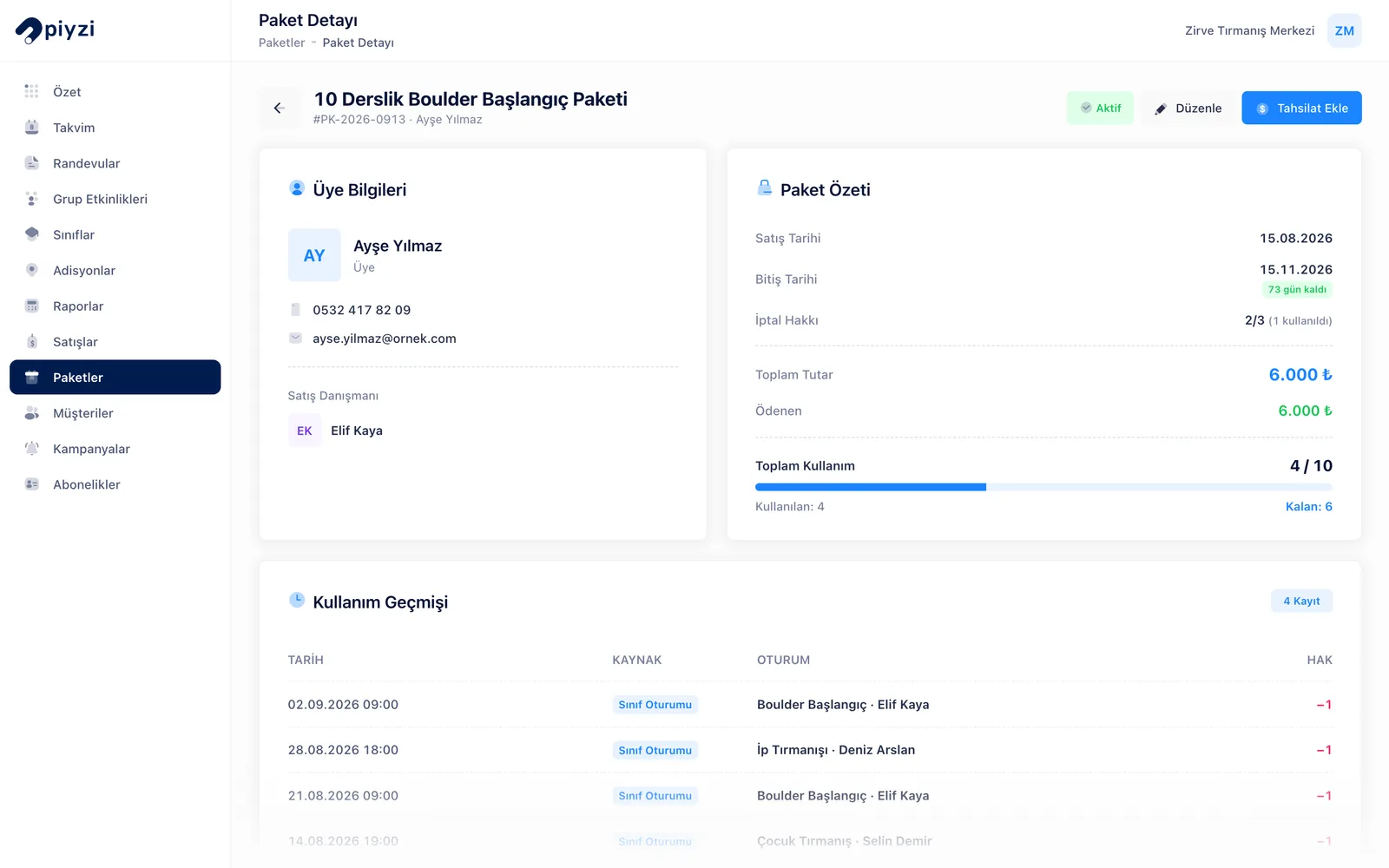
- Session Pack Tracking: Course packs, private lesson packs, and day-pass tickets are managed in separate pools.
- Instructor Scheduling: Each climbing coach's calendar, student list, and commission are tracked separately.
- Member Progress Tracking: Each member's completed routes, current grade target, training notes, and gear rental history are stored chronologically.
How Piyzi transforms your daily workflow
When you arrive at the gym in the morning, you open the Piyzi dashboard and see the day's reservations in hourly slots. The 10:00-12:00 slot is half full, 2:00-4:00 is completely booked, the evening 7:00-9:00 peak is busy -- all visible in real time. Members scan their QR code at entry. The system checks current occupancy and admits them if safe capacity isn't exceeded. For day-pass visitors, a quick-sale screen opens. For gear rentals, a separate checkout screen activates.
In the afternoon, new registrations for your beginner course come through the system. The participant list updates automatically. In the evening, when your route setter opens a new problem set, you enter the route names, grades, and style notes into the system. All members are notified automatically. At end of day, the register report is in front of you: day-pass sales, membership payments, gear rental revenue, course fees -- each reported separately. Weekly reports show your busiest hours, most popular courses, and most completed routes -- so you manage your gym with data.
The Piyzi difference: boulder/route tracking, grading systems, and courses in depth
The real power of climbing gym software reveals itself with route tracking and grading systems. Boulder and lead routes are measured on the V-scale (V0-V17) or French grading system (5a, 6b, 7c+, etc.). Each route has a name, set date, setter, style (dynamic, balance, technical), and difficulty level. Piyzi logs each route with all this information. Members add completed routes to their profile, giving them visibility into their climbing project, grade progression, and discovery stats. The gym owner, meanwhile, sees data on which routes get the most traffic, which grades are underrepresented, and which areas need a route reset.
Courses and trial sessions are among the most important revenue channels for climbing gyms. A beginner course typically runs 4 weeks, 8 classes, with limited capacity. Piyzi offers a dedicated module for these courses: when creating a course template, you define duration, class count, instructor, capacity, and price. As soon as online registration opens, participants flow into the system. Paid and pending registrations are listed separately. Throughout the course, attendance is tracked automatically via QR. Participants who miss a class get a reminder. When the course ends, all data is ready for certificate issuance. The same system works for both a 2-hour trial session and a 4-week beginner course -- you just change the parameters.
Tangible gains for your climbing gym
Here are the concrete results climbing gyms typically see in the first months after switching to Piyzi:
- Boulder capacity stays within safe limits. Weekend crowding tensions end.
- Beginner courses and workshops run with a professional registration flow. Fill rates increase significantly.
- Newly set routes and grades are systematically archived. Members are notified instantly. Community engagement rises.
- Day-pass, membership, and gear rental revenues are reported separately, enabling data-driven financial decisions.
Take your climbing gym to the next level with Piyzi
Running a climbing gym isn't just about designing great routes and keeping walls modern. It means bringing hundreds of different user types together in a safe, professional experience. Continuing to manage this operational intensity with paper notebooks, WhatsApp, and Instagram DMs limits both member satisfaction and profitability. Piyzi was designed to remove that limitation -- built with a deep understanding of the climbing industry's real needs.
Try all features free for 14 days, import your member list, and set up your first slot system within hours. No credit card required, no commitment -- walk away without paying a cent if it's not for you. It's time to take your gym to the next level in both safety and community quality. Create your trial account now and open your first slot reservation with Piyzi.